
St. Colette: A Model of Radical Obedience to God
St. Colette of Corbie, a 15th-century French nun, is celebrated in the Catholic Church for her profound devotion to Christ and her unwavering obedience to His will. She was a model of humility, piety, and poverty, and her life serves as an inspiration to all who seek to follow Christ more closely.
Early Life and Conversion
Colette was born in 1381 in the village of Corbie, in the Picardy region of France. Her parents, Robert and Marguerite Boellet, were pious and well-respected members of their community. From a young age, Colette showed a deep love for God and a desire to live a life of prayer and devotion.
As a teenager, Colette was inspired by the teachings of St. Francis of Assisi and his followers, known as the Franciscans. She longed to live a life of poverty and simplicity, following in the footsteps of St. Francis and his companions.
In 1402, at the age of 21, Colette decided to join the Third Order of St. Francis. She lived as a layperson for several years, working in hospitals and caring for the sick and the poor. However, she soon felt called to a more radical way of life, and in 1406 she entered the monastery of the Poor Clares in Besançon.
Life as a Poor Clare
Colette’s time in the monastery was marked by her deep prayer life, her strict adherence to the Rule of St. Clare, and her commitment to serving the other sisters. She was known for her humility, her simplicity, and her willingness to do the most menial tasks.
However, Colette was also known for her prophetic visions and her ability to perform miracles. She had a special devotion to the Holy Eucharist and would often spend hours in prayer before the Blessed Sacrament.
In 1410, Colette received a vision from God in which she was instructed to reform the Poor Clares. She was to establish a new community of sisters who would live a more rigorous and austere life, following the original Rule of St. Clare.
Despite much opposition from within the Church and from other religious orders, Colette remained steadfast in her obedience to God’s will. She founded her first convent in Ghent, Belgium, in 1412, and over the next several years she established several more communities throughout France and the Low Countries.
Legacy and Canonization
St. Colette’s reforms had a profound impact on the Poor Clares and on the Church as a whole. Her communities were known for their strict adherence to poverty and simplicity, their devotion to the Eucharist, and their commitment to serving the poor and the sick.
St. Colette died in 1447 at the age of 66. She was canonized by Pope Pius VII in 1807, and her feast day is celebrated on March 6th.
St. Colette’s life is a testament to the power of radical obedience to God’s will. She was willing to leave behind everything she knew and loved in order to follow Christ more closely, and she was willing to face opposition and persecution in order to reform the Church. May we all be inspired by her example and strive to follow Christ with the same courage and devotion.
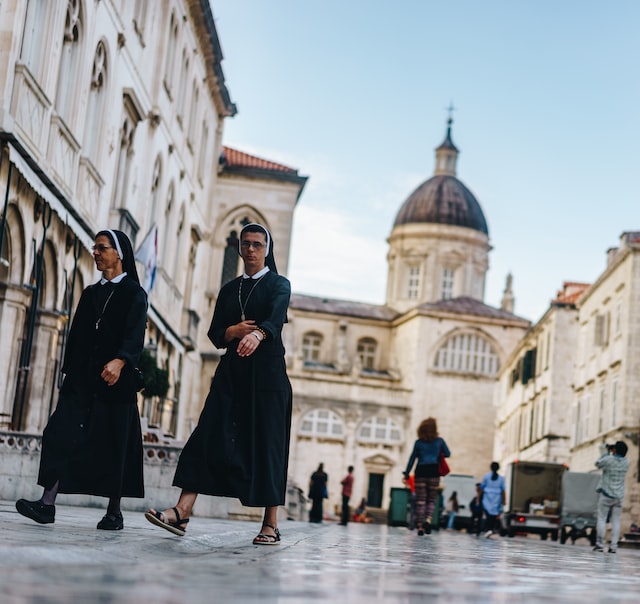
Photo by Vladimir Šoić on Unsplash